Buy vfool.com ?
We are moving the project
vfool.com .
Are you interested in purchasing the domain
vfool.com ?
domain@kv-gmbh.de · 0541-91531010
Buy vfool.com ?
What are conjunctional clauses, relative clauses, demonstrative clauses, and infinitive clauses?
Conjunctional clauses are dependent clauses that are introduced by a conjunction, such as "because," "although," or "while." They provide additional information about the main clause in a sentence. Relative clauses are also dependent clauses that provide more information about a noun in the main clause. They are introduced by relative pronouns like "who," "which," or "that." Demonstrative clauses are dependent clauses that function as adjectives and provide more information about a noun in the main clause. They are introduced by demonstrative pronouns like "this," "that," "these," or "those." Infinitive clauses are dependent clauses that are formed with an infinitive verb (to + base form of the verb). They can function as nouns, adjectives, or adverbs in a sentence. **
Are conjunctive clauses always adverbial clauses?
No, conjunctive clauses are not always adverbial clauses. While adverbial clauses are a type of conjunctive clause that function as adverbs to modify verbs, adjectives, or other adverbs, there are also other types of conjunctive clauses. For example, there are conjunctive clauses that function as noun clauses, such as in "I know that you are busy." In this sentence, "that you are busy" is a conjunctive clause functioning as a noun clause, not an adverbial clause. Therefore, conjunctive clauses can serve various grammatical functions beyond just adverbial clauses. **


Similar search terms for Clauses
Top-Angebote
Products related to Clauses:
-
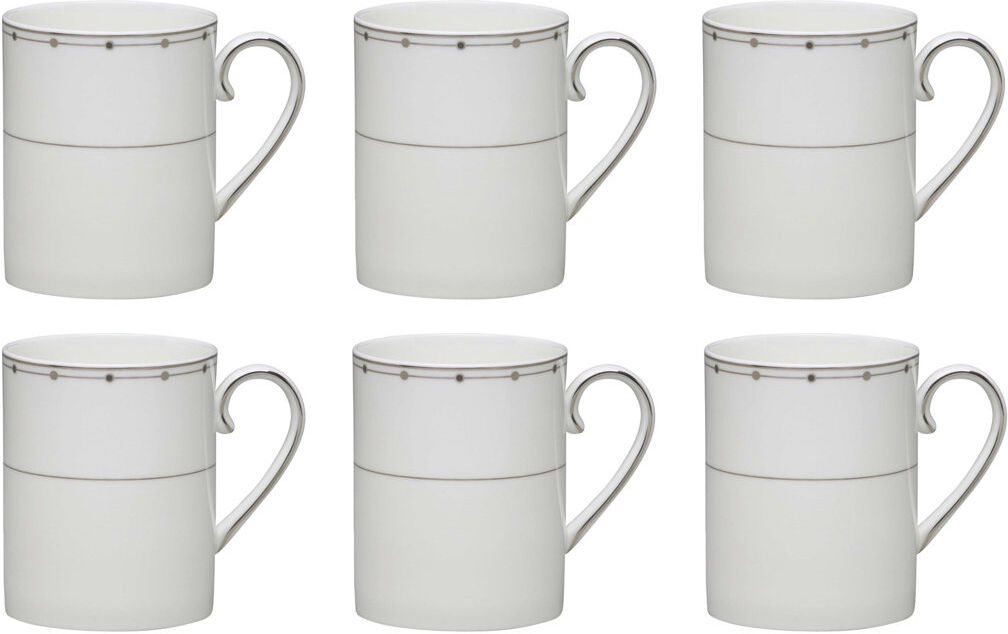
Elia Jester Bone China Coffee Mug Cream 28mlElia’s Jester range has the benefit of being perfectly at home both in a modern or traditional setting. With its beautiful real Platinum and shining black design, it is understated sophistication at its finest. This stunning Fine Bone China range has a delicate decoration but it is undoubtedly of strong and durable construction. Not suitable for use in microwave ovens, hand wash recommended. This set includes 6 x pieces of the Jester Fine Bone China Mugs. Elia76,99 £*Shipping: 0,00 £Secure redirect to the provider
-
Uplifted Trends Rocky Raccoon Magic Trick Toy Comedy Stage Gimmick Rocky Raccoon Magic Trick Toy Comedy Stage GimmickDelight your audience with the Rocky Raccoon Magic Trick Toy, a hilarious and captivating prop that brings laughter and wonder to any performance. Perfect for magicians, entertainers, or anyone who loves fun surprises, this springloaded magic...39,97 $*Shipping: 0,00 $Secure redirect to the provider
-
HomeDecorAndMore LLC Silly Succulent Plushies 3Pcs SucculentDo you want your succulent plant to be a constant companion Regardless of whether you're reading or working on your laptop Wear your dream a reality cloak with our Silly Succulent Plushies! It’s cuddly soft and supremely cute. And, what's more, its...39,97 $*Shipping: 0,00 $Secure redirect to the provider
-
Uplift Picks Funny Silly Walk Wall Clock Creative Silent Novelty Home Decor Funny Silly Walk Wall Clock Creative Silent Novelty Home DecorAdd humor and personality to your space with this eyecatching funny wall clock inspired by playful artistic design. Featuring a quirky walking figure, this novelty wall clock turns timekeeping into a fun visual experience. Its creative style makes...80,50 $*Shipping: 0,00 $Secure redirect to the provider



-
What are relative clauses and conjunctional clauses?
Relative clauses are clauses that provide additional information about a noun in the main clause. They are introduced by relative pronouns such as "who," "which," "that," and "whom." For example, in the sentence "The book that I read is very interesting," the relative clause "that I read" provides more information about the noun "book." Conjunctional clauses, on the other hand, are clauses that are connected to the main clause by conjunctions such as "and," "but," "or," "if," and "because." They can express relationships such as addition, contrast, alternative, condition, and cause. For example, in the sentence "I will go to the park if the weather is nice," the conjunctional clause "if the weather is nice" expresses a condition for the action in the main clause. **
-
What are the French conditional clauses (si-clauses)?
French conditional clauses, also known as si-clauses, are used to express a hypothetical situation and its potential outcome. They consist of two parts: the si clause (if clause), which describes the condition, and the main clause, which describes the potential result. The si clause is typically formed using the conjunction "si" followed by the imperfect tense or the pluperfect tense, while the main clause is formed using the conditional tense. These clauses are commonly used to talk about what would happen in certain situations if a specific condition were met. **
-
How can main clauses and subordinate clauses be recognized?
Main clauses can be recognized by their ability to stand alone as complete sentences, containing a subject and a predicate. Subordinate clauses, on the other hand, cannot stand alone as complete sentences and are dependent on the main clause for their meaning. They often begin with subordinating conjunctions such as "because," "although," "while," or "if." Additionally, subordinate clauses often function as adverbial, adjectival, or nominal clauses, providing additional information about the main clause. **
-
How can subordinate clauses be rewritten as main clauses?
Subordinate clauses can be rewritten as main clauses by removing the subordinating conjunction and making any necessary adjustments to the verb tense or word order. For example, the subordinate clause "because she was tired" can be rewritten as the main clause "she was tired." This transformation allows the subordinate clause to stand alone as a complete sentence. Additionally, any pronouns or other words that were dependent on the subordinating conjunction may need to be adjusted to ensure the new main clause is grammatically correct. **


How can one recognize main clauses and subordinate clauses?
Main clauses can stand alone as complete sentences, while subordinate clauses cannot. Subordinate clauses often begin with subordinating conjunctions such as "although," "because," "if," "when," or "while." They also often contain a subject and a verb, but they do not express a complete thought on their own. Main clauses, on the other hand, express a complete thought and can function as independent sentences. By identifying these characteristics, one can recognize main and subordinate clauses in a sentence. **
How can adverbial clauses be used as subordinate clauses?
Adverbial clauses can be used as subordinate clauses to provide additional information about the main clause. They can modify the verb in the main clause by expressing time, place, manner, condition, reason, purpose, or concession. For example, in the sentence "She went to bed after she finished her homework," the adverbial clause "after she finished her homework" provides information about the timing of the main action "She went to bed." Adverbial clauses are introduced by subordinating conjunctions such as after, before, while, since, because, if, although, etc. **
Top-Angebote
Products related to Clauses:
-
Enesco/Dept 56 More Letters for the Clauses Clothtique Red , RedEvery year, Mr. and Mrs. Claus are eager to receive and read More Letters for the Clauses. The red mailbox has holiday accents including holly leaves, red berries, and a red bow; it is filled with wrapped packages and rolled-up letters. This happy...149,99 $*Shipping: 20,95 $Secure redirect to the provider
-
Enesco/Dept 56 More Letters for the Clauses African American Clothtique Red , RedEvery year, Mr. and Mrs. Claus are eager to receive and read More Letters for the Clauses. The red mailbox has holiday accents including holly leaves, red berries, and a red bow; it is filled with wrapped packages and rolled-up letters. This happy,...149,99 $*Shipping: 20,95 $Secure redirect to the provider
-
Elia Jester Bone China Coffee Mug Cream 28mlElia’s Jester range has the benefit of being perfectly at home both in a modern or traditional setting. With its beautiful real Platinum and shining black design, it is understated sophistication at its finest. This stunning Fine Bone China range has a delicate decoration but it is undoubtedly of strong and durable construction. Not suitable for use in microwave ovens, hand wash recommended. This set includes 6 x pieces of the Jester Fine Bone China Mugs. Elia76,99 £*Shipping: 0,00 £Secure redirect to the provider
-
Uplifted Trends Rocky Raccoon Magic Trick Toy Comedy Stage Gimmick Rocky Raccoon Magic Trick Toy Comedy Stage GimmickDelight your audience with the Rocky Raccoon Magic Trick Toy, a hilarious and captivating prop that brings laughter and wonder to any performance. Perfect for magicians, entertainers, or anyone who loves fun surprises, this springloaded magic...39,97 $*Shipping: 0,00 $Secure redirect to the provider
-
What are conjunctional clauses, relative clauses, demonstrative clauses, and infinitive clauses?
Conjunctional clauses are dependent clauses that are introduced by a conjunction, such as "because," "although," or "while." They provide additional information about the main clause in a sentence. Relative clauses are also dependent clauses that provide more information about a noun in the main clause. They are introduced by relative pronouns like "who," "which," or "that." Demonstrative clauses are dependent clauses that function as adjectives and provide more information about a noun in the main clause. They are introduced by demonstrative pronouns like "this," "that," "these," or "those." Infinitive clauses are dependent clauses that are formed with an infinitive verb (to + base form of the verb). They can function as nouns, adjectives, or adverbs in a sentence. **
-
Are conjunctive clauses always adverbial clauses?
No, conjunctive clauses are not always adverbial clauses. While adverbial clauses are a type of conjunctive clause that function as adverbs to modify verbs, adjectives, or other adverbs, there are also other types of conjunctive clauses. For example, there are conjunctive clauses that function as noun clauses, such as in "I know that you are busy." In this sentence, "that you are busy" is a conjunctive clause functioning as a noun clause, not an adverbial clause. Therefore, conjunctive clauses can serve various grammatical functions beyond just adverbial clauses. **
-
What are relative clauses and conjunctional clauses?
Relative clauses are clauses that provide additional information about a noun in the main clause. They are introduced by relative pronouns such as "who," "which," "that," and "whom." For example, in the sentence "The book that I read is very interesting," the relative clause "that I read" provides more information about the noun "book." Conjunctional clauses, on the other hand, are clauses that are connected to the main clause by conjunctions such as "and," "but," "or," "if," and "because." They can express relationships such as addition, contrast, alternative, condition, and cause. For example, in the sentence "I will go to the park if the weather is nice," the conjunctional clause "if the weather is nice" expresses a condition for the action in the main clause. **
-
What are the French conditional clauses (si-clauses)?
French conditional clauses, also known as si-clauses, are used to express a hypothetical situation and its potential outcome. They consist of two parts: the si clause (if clause), which describes the condition, and the main clause, which describes the potential result. The si clause is typically formed using the conjunction "si" followed by the imperfect tense or the pluperfect tense, while the main clause is formed using the conditional tense. These clauses are commonly used to talk about what would happen in certain situations if a specific condition were met. **
Similar search terms for Clauses
-
HomeDecorAndMore LLC Silly Succulent Plushies 3Pcs SucculentDo you want your succulent plant to be a constant companion Regardless of whether you're reading or working on your laptop Wear your dream a reality cloak with our Silly Succulent Plushies! It’s cuddly soft and supremely cute. And, what's more, its...39,97 $*Shipping: 0,00 $Secure redirect to the provider
-
Uplift Picks Funny Silly Walk Wall Clock Creative Silent Novelty Home Decor Funny Silly Walk Wall Clock Creative Silent Novelty Home DecorAdd humor and personality to your space with this eyecatching funny wall clock inspired by playful artistic design. Featuring a quirky walking figure, this novelty wall clock turns timekeeping into a fun visual experience. Its creative style makes...80,50 $*Shipping: 0,00 $Secure redirect to the provider
-
Lucys Farm Lucy's Farm Silly Friesian Moo Design Adult ApronThe Lucy's Farm Silly Friesian Moo Design Adult Apron will ensure your clothes stay clean while baking and cooking. This playful and cheeky adult-sized apron is part of the Lucy's Friesian Moo Collection, with other matching items like oven gloves, tea towels, chopping boards and even fine bone china kitchenware, sold separately. Just one of the quirky characters Lucy encounters during her morning walks with Ned across the hills of the Isle of Purbeck. Made from high quality white 8oz Half Panama using ethically sourced cotton. The apron features an adjustable neck strap for comfort. Made in the UK.19,50 £*Shipping: 3,50 £Secure redirect to the provider
-
Lucys Farm Lucy's Farm Silly Friesian Moo Cow Large MugThe Lucy's Farm Silly Friesian Moo Cow Large Mug is made from fine bone china and is perfect for enjoying a relaxing cup of tea with family or friends or simple just having a well deserved break. The mug features Silly Friesian Moo Cow the gentle and loveable character. The mug has 380ml capacity and dishwasher safe for easy and convenient cleaning. Made in the UK, this Lucy's Farm Silly Friesian Moo Cow Large Mug is great for gifting or collecting as part of a collection, with other items available, sold separately.15,50 £*Shipping: 3,50 £Secure redirect to the provider
-
How can main clauses and subordinate clauses be recognized?
Main clauses can be recognized by their ability to stand alone as complete sentences, containing a subject and a predicate. Subordinate clauses, on the other hand, cannot stand alone as complete sentences and are dependent on the main clause for their meaning. They often begin with subordinating conjunctions such as "because," "although," "while," or "if." Additionally, subordinate clauses often function as adverbial, adjectival, or nominal clauses, providing additional information about the main clause. **
-
How can subordinate clauses be rewritten as main clauses?
Subordinate clauses can be rewritten as main clauses by removing the subordinating conjunction and making any necessary adjustments to the verb tense or word order. For example, the subordinate clause "because she was tired" can be rewritten as the main clause "she was tired." This transformation allows the subordinate clause to stand alone as a complete sentence. Additionally, any pronouns or other words that were dependent on the subordinating conjunction may need to be adjusted to ensure the new main clause is grammatically correct. **
-
How can one recognize main clauses and subordinate clauses?
Main clauses can stand alone as complete sentences, while subordinate clauses cannot. Subordinate clauses often begin with subordinating conjunctions such as "although," "because," "if," "when," or "while." They also often contain a subject and a verb, but they do not express a complete thought on their own. Main clauses, on the other hand, express a complete thought and can function as independent sentences. By identifying these characteristics, one can recognize main and subordinate clauses in a sentence. **
-
How can adverbial clauses be used as subordinate clauses?
Adverbial clauses can be used as subordinate clauses to provide additional information about the main clause. They can modify the verb in the main clause by expressing time, place, manner, condition, reason, purpose, or concession. For example, in the sentence "She went to bed after she finished her homework," the adverbial clause "after she finished her homework" provides information about the timing of the main action "She went to bed." Adverbial clauses are introduced by subordinating conjunctions such as after, before, while, since, because, if, although, etc. **
* All prices are inclusive of VAT and, if applicable, plus shipping costs. The offer information is based on the details provided by the respective shop and is updated through automated processes. Real-time updates do not occur, so deviations can occur in individual cases. ** Note: Parts of this content were created by AI.